Durian Canker Disease
From Diagnosis to Full Recovery
A real-farm, photo-documented protocol showing how the M-PLUS Bio RootGuard + GrowShield + NutriBoost trio eliminates canker disease and restores tree health — without synthetic fungicides.
What is Durian Canker Disease?
Durian canker — caused primarily by Phytophthora palmivora and Fusarium species — is one of the most economically destructive diseases in Malaysian and Thai durian orchards. The pathogen invades through wounds, root zones, and bark cracks, causing progressive tissue necrosis, gum oozing, and vascular collapse. Left untreated, it kills mature trees within one to two seasons.
Traditional management relies on repeated synthetic fungicide applications — a strategy that provides temporary suppression but fails to address the root cause, builds pathogen resistance over time, and leaves chemical residues that compromise premium export markets. The M-PLUS Bio protocol takes a fundamentally different approach: activating the tree’s own immune system while physically sealing wounds and rebuilding the root zone.
Primary Pathogen
Phytophthora palmivora
Soil-borne oomycete
Secondary Pathogen
Fusarium spp.
Necrotrophic fungus
Entry Points
Wounds, root collar, bark cracks
Spreads via water splash
Photo-Documented Treatment Journey
Real farms. Real disease. Real recovery. Documented across 3 stages from two independent farms.
Stage 1 — Disease Discovered
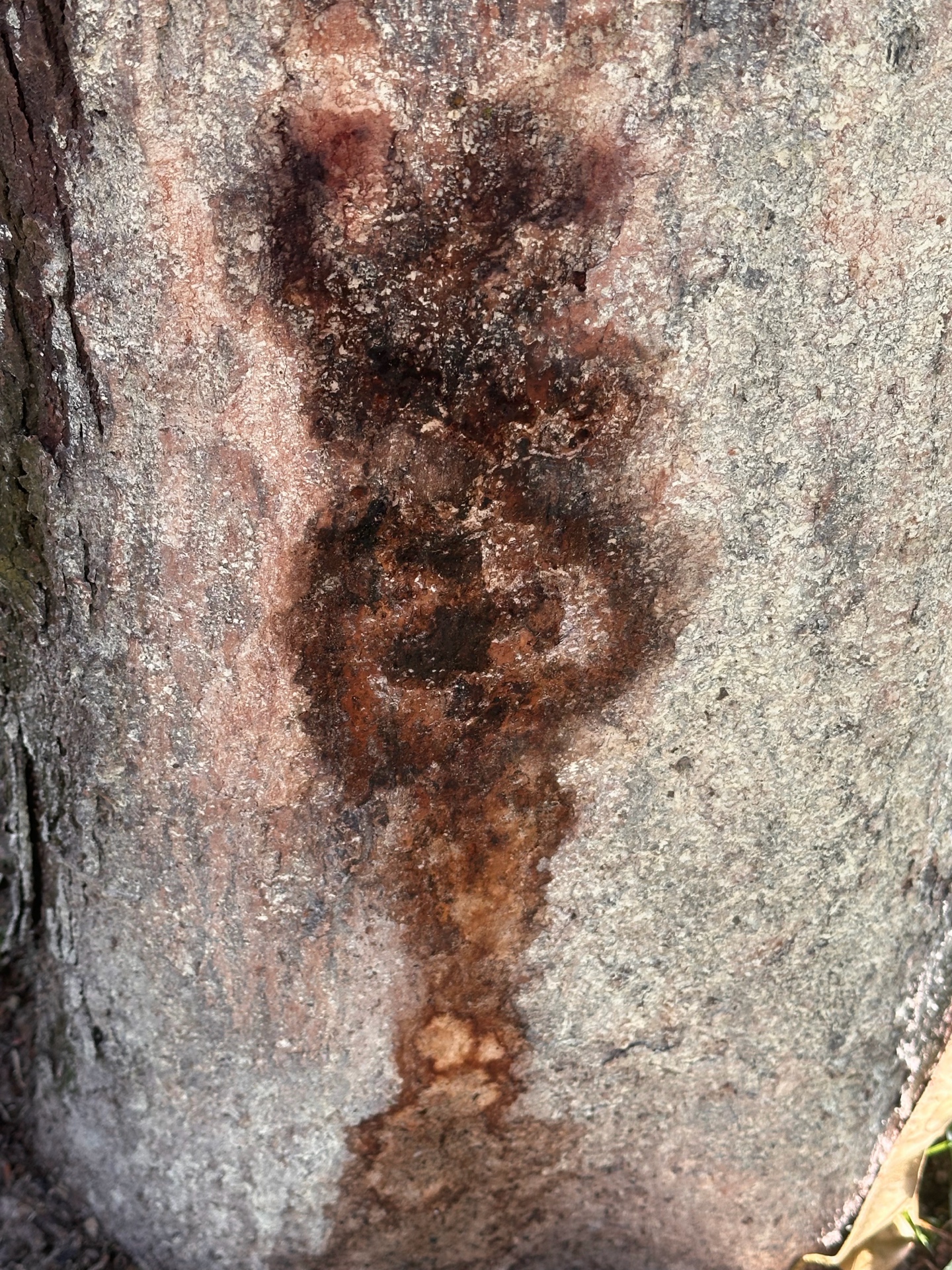
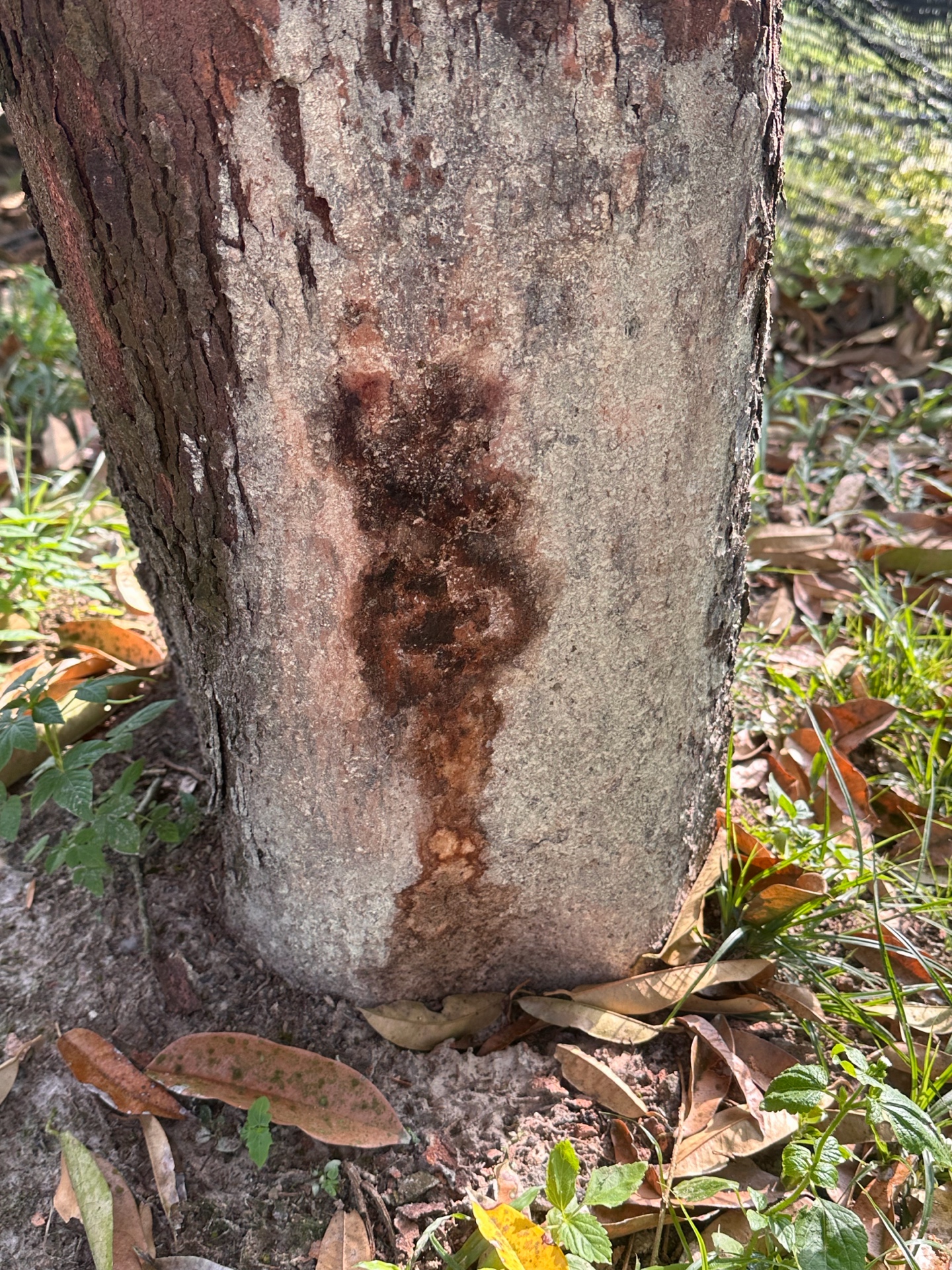
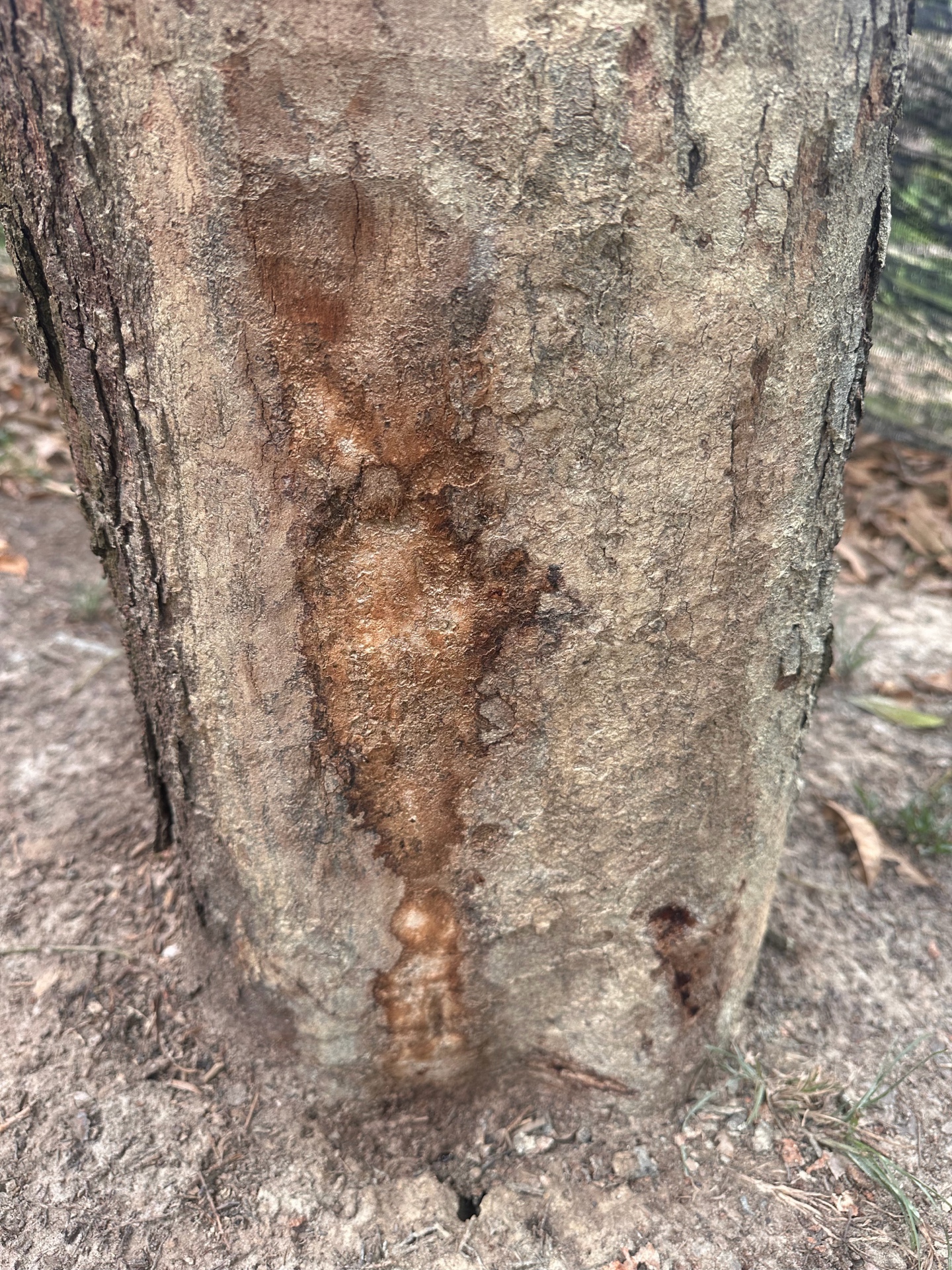
Week 0 · Canker lesions identified on trunk and major branches — bark cracking, gum oozing, tissue necrosis visible
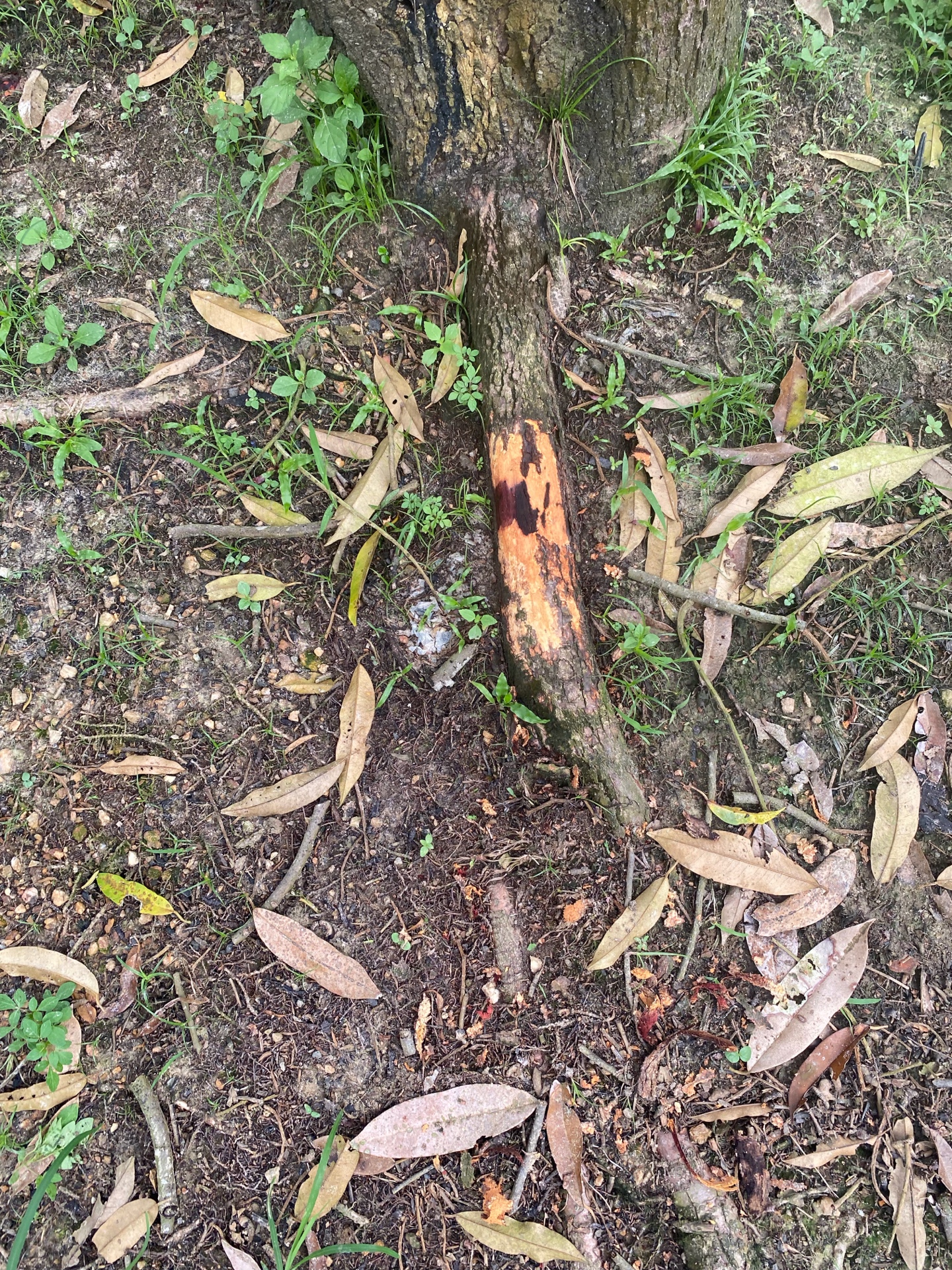
Bark cracking with gum oozing
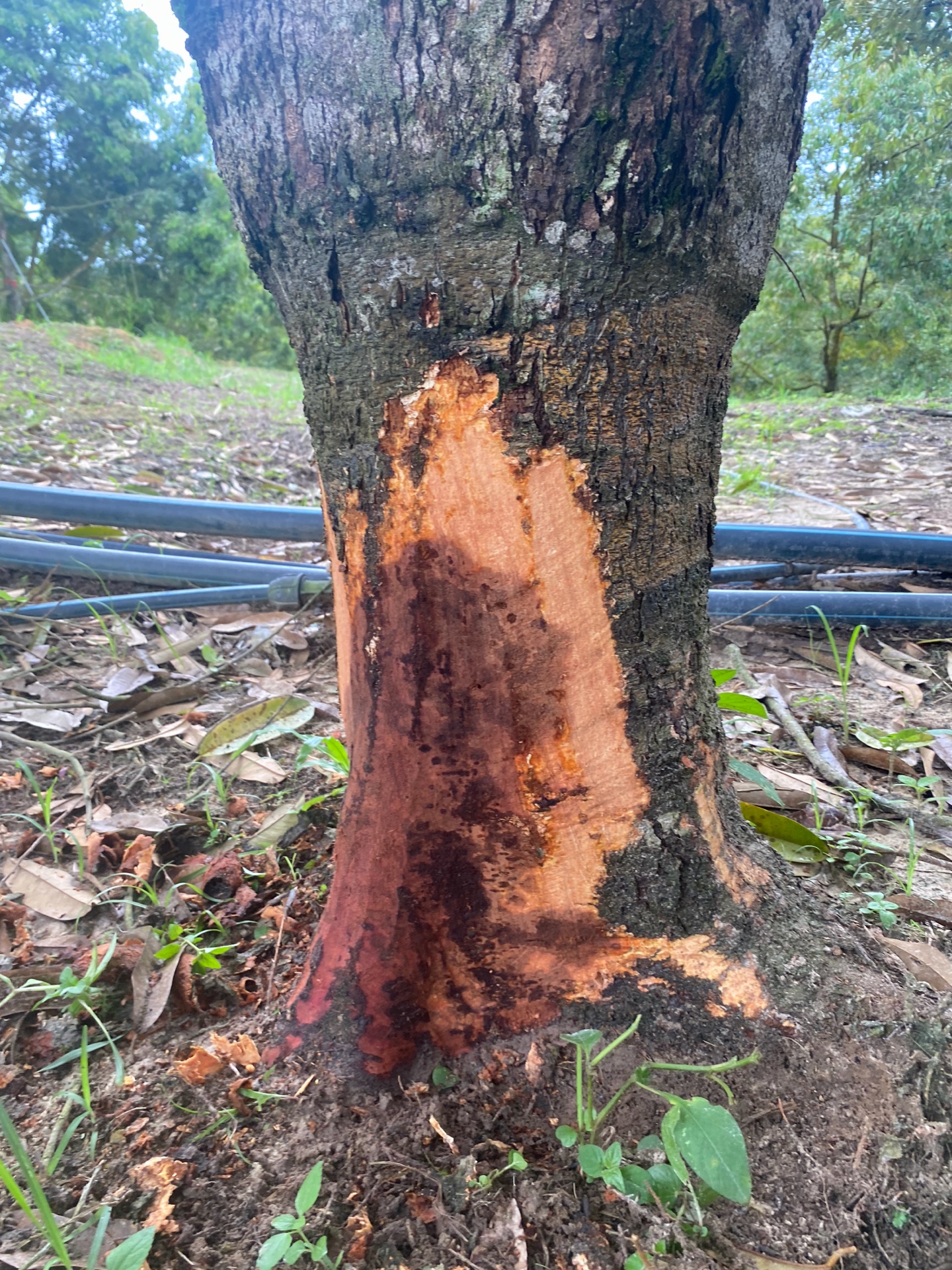
Tissue necrosis on trunk
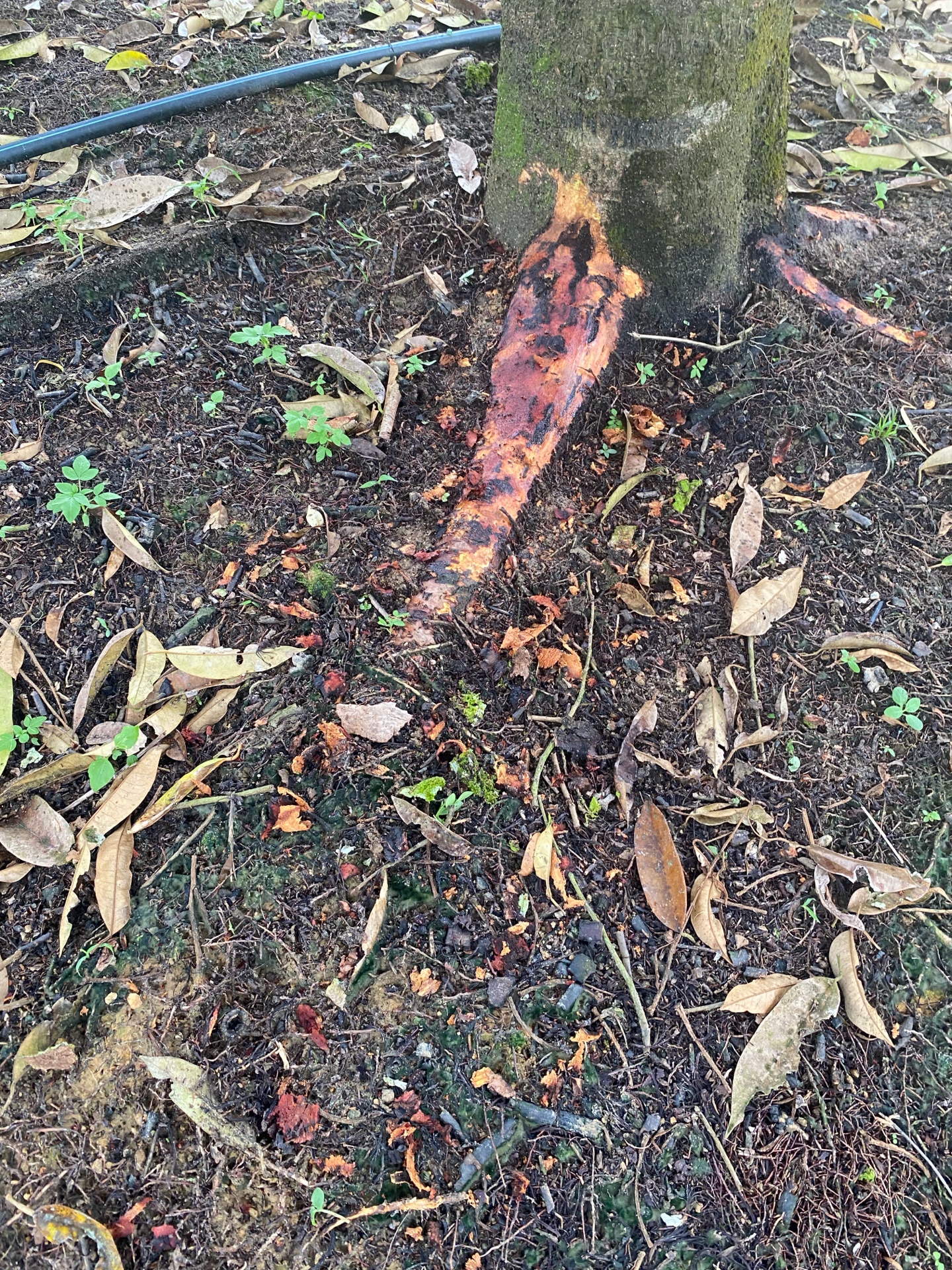
Canker lesion spreading
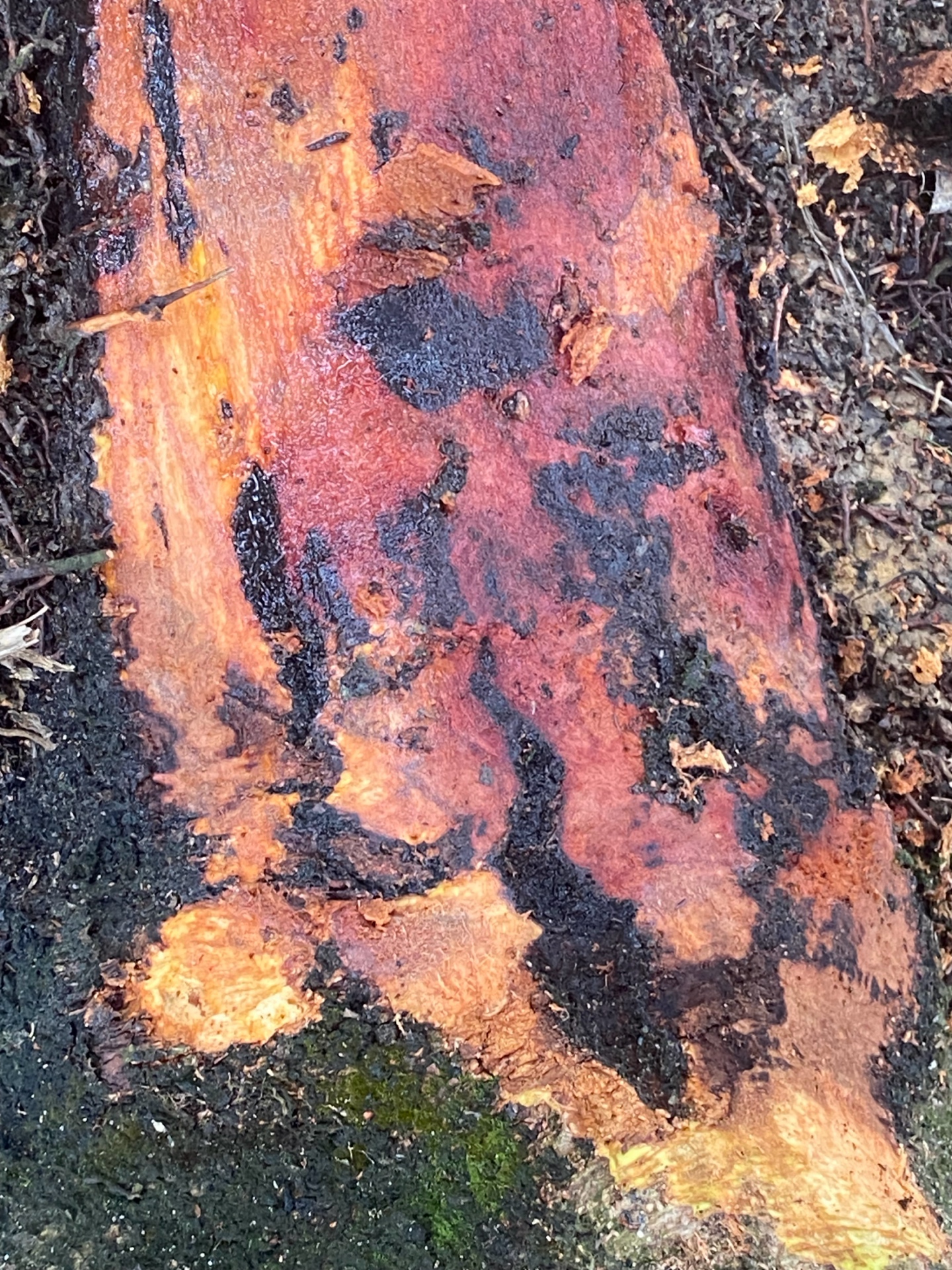
Vascular discolouration
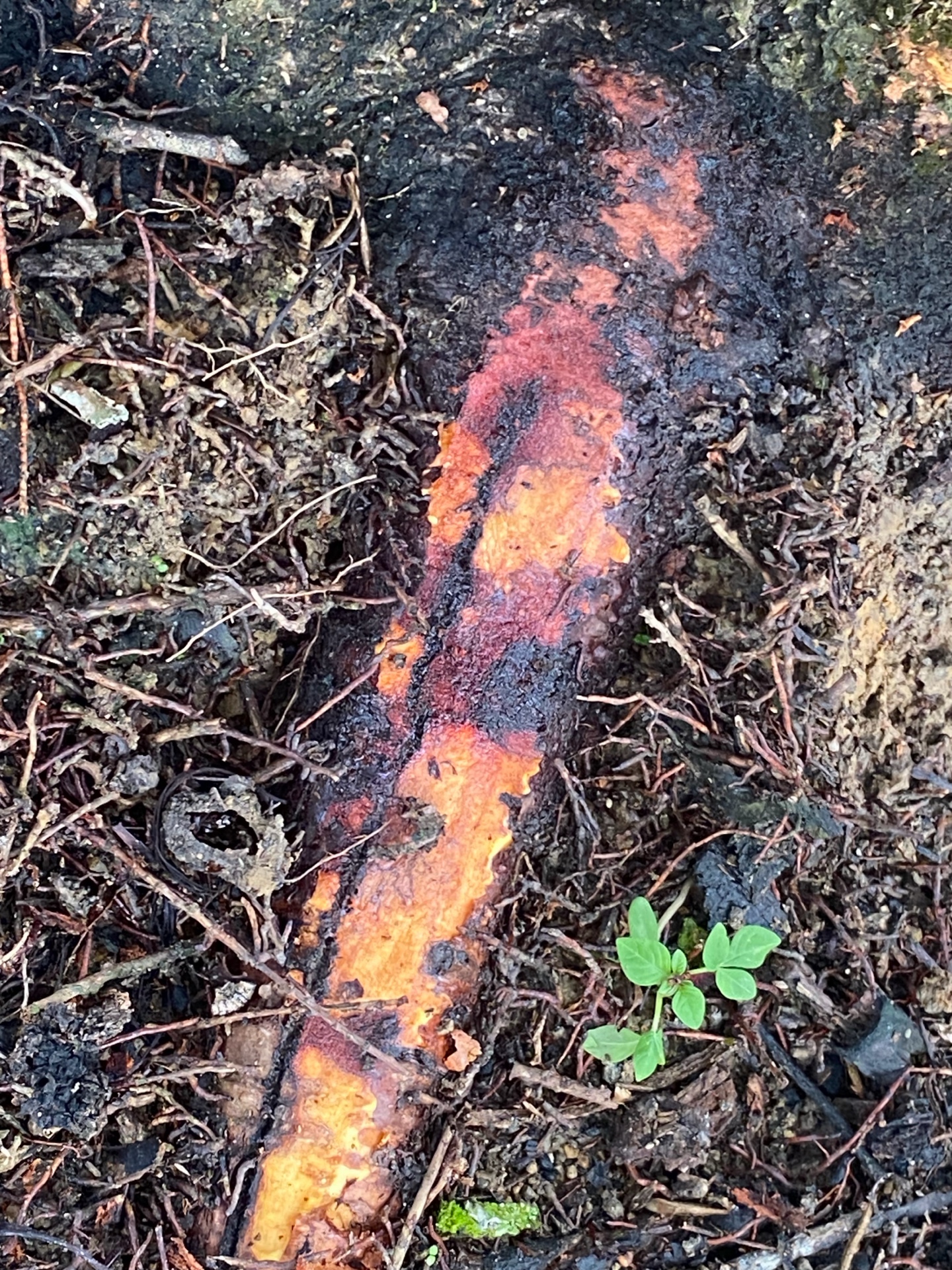
Phytophthora infection signs
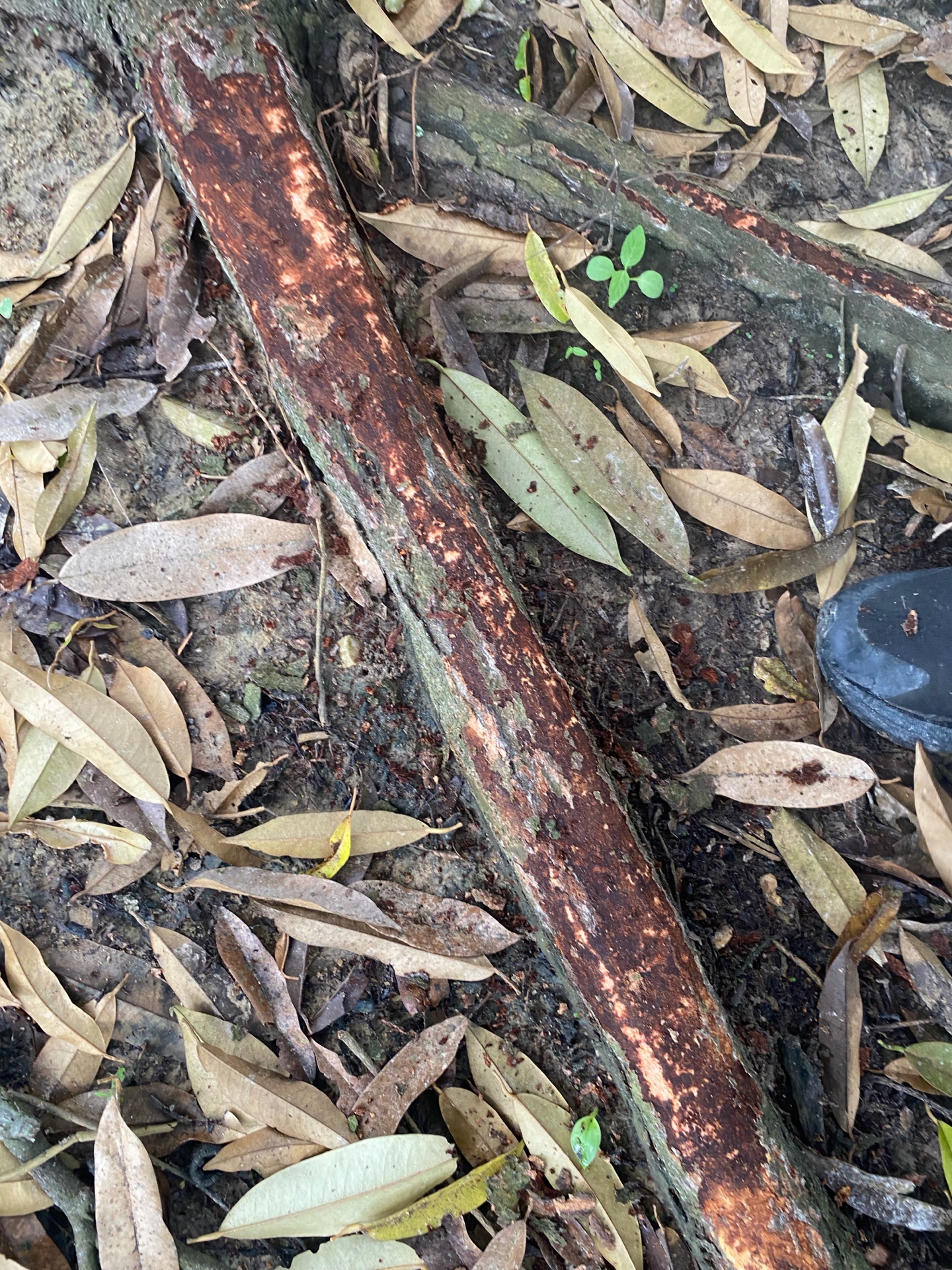
Advanced canker on branch
Stage 2 — Treatment in Progress
Weeks 1–10 · RootGuard soil drench + GrowShield wound paste applied; NutriBoost foliar spray for recovery support
RootGuard soil drench applied
GrowShield wound paste applied to lesions
RootGuard 护根灵
Triggers systemic immune responses (PTI, SA, JA pathways) via Oligogalacturonides. Fortifies root structures and vascular tissues against Phytophthora palmivora and Fusarium.
📋 5 mL in 4 L water · 3 L per tree · Once every 3 months (monthly during active disease)
GrowShield 疤愈灵
Topical bio-formulation that accelerates healing at wound sites and forms a durable biological film blocking pathogen ingress. Supports bark and vascular tissue regeneration.
📋 Spray to trunk, bark, and exposed wounds · 10 L treats ~30 trees · Weekly for 3–6 months
NutriBoost 肥力宝
Rehabilitates root zone by restoring microbial balance and regenerating fibrous root hairs. Improves nutrient uptake and builds long-term resistance to future root rot recurrence.
📋 Spray around trunk base and root collar · Weekly for 10 weeks · Monthly maintenance thereafter
Stage 3 — After Application & Healed
Week 12 · Lesions sealed and callused over; bark regenerating; tree returned to healthy vigour
Lesions sealed and callused
Bark regenerating
New bark tissue forming
Tree vigour restored
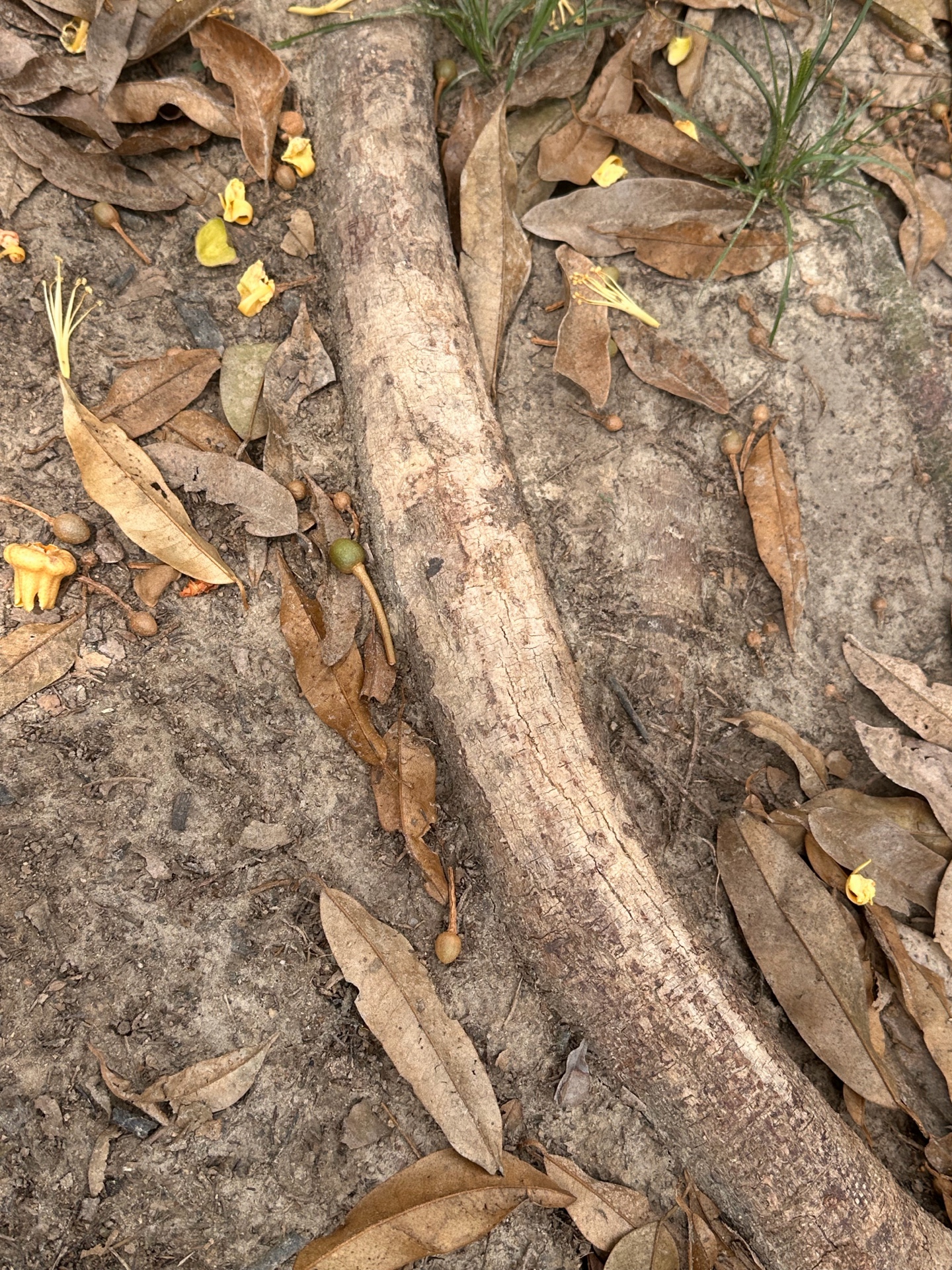
Healthy trunk after 12 weeks
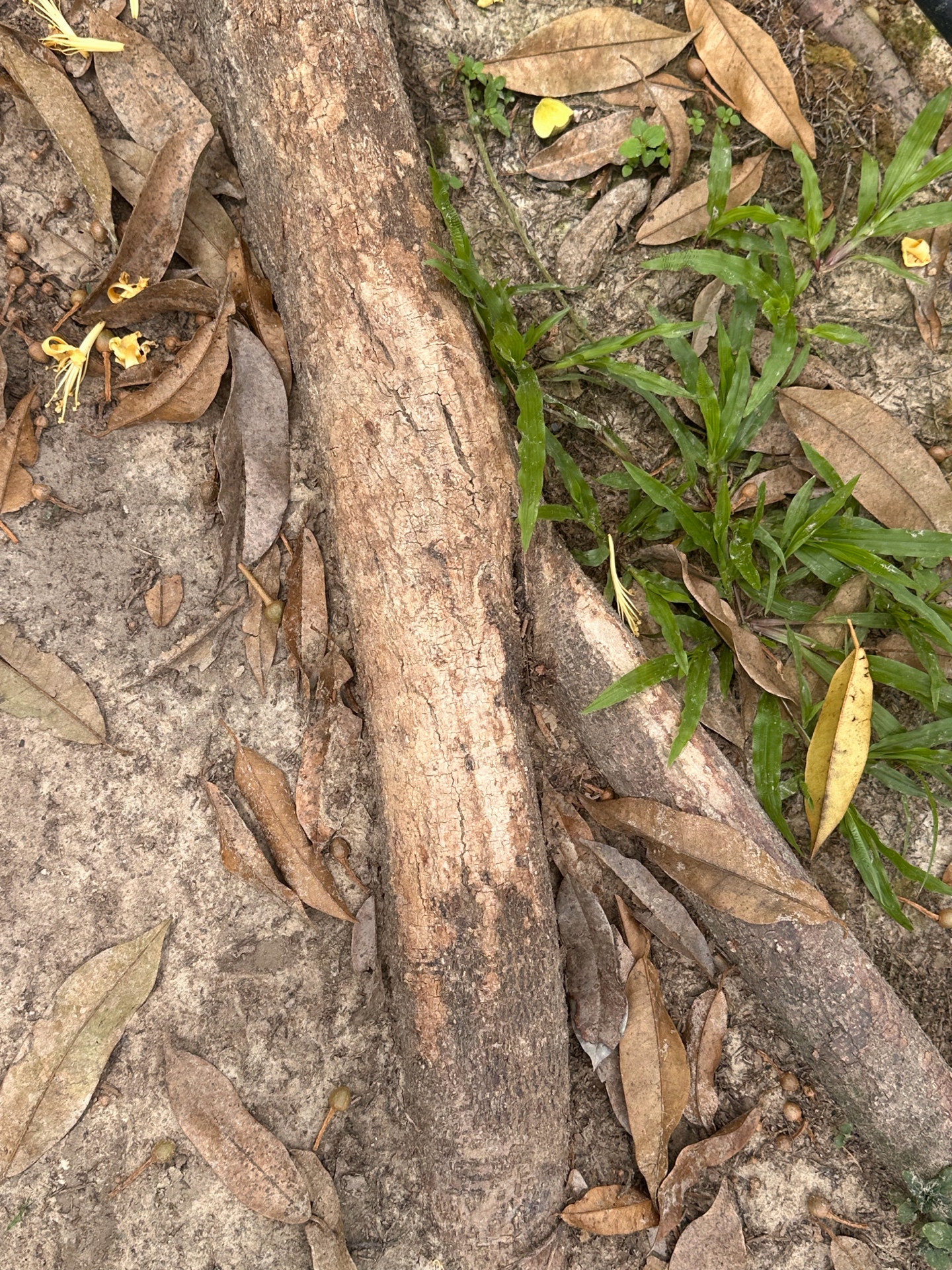
Full recovery — clean bark
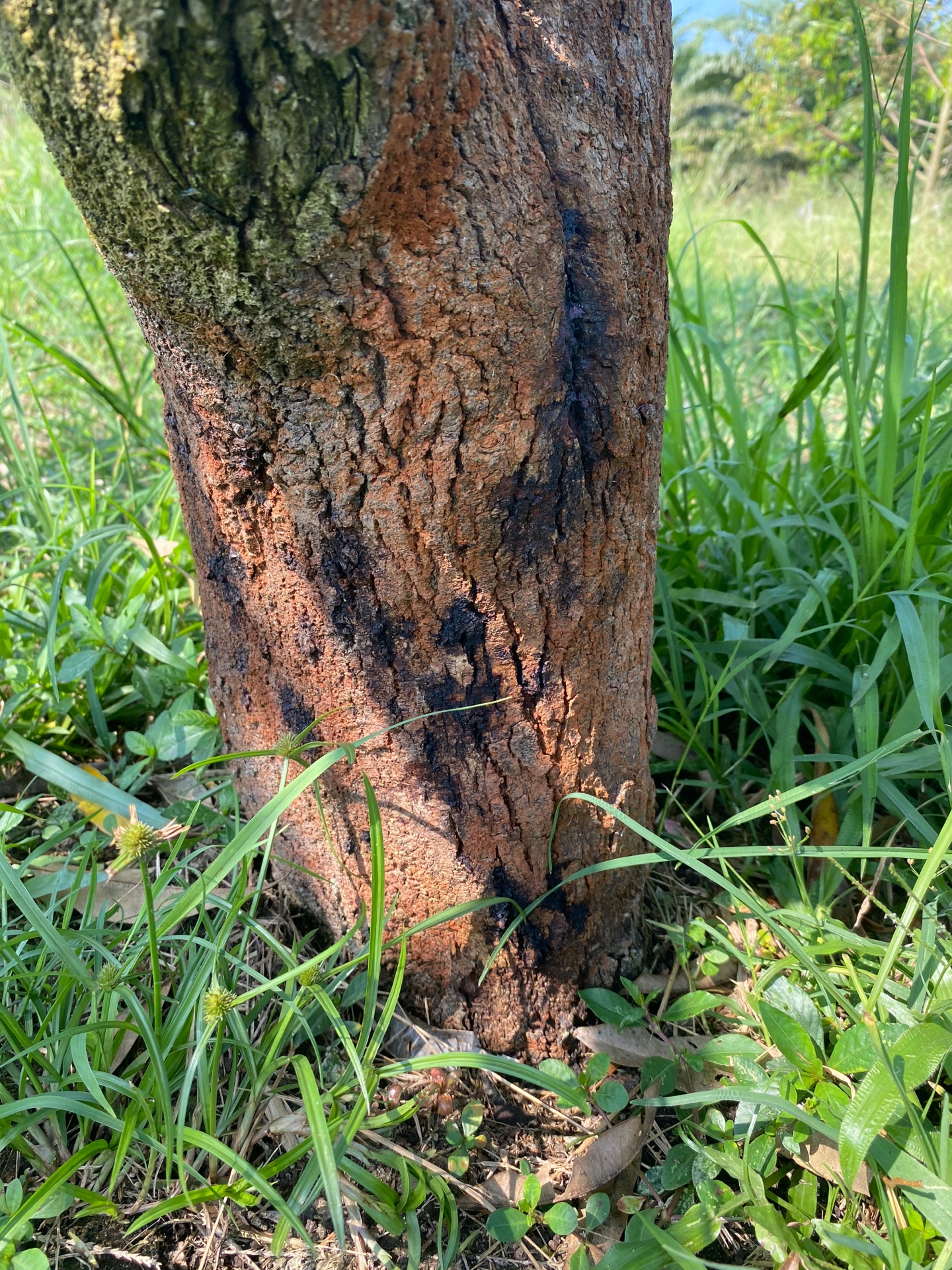
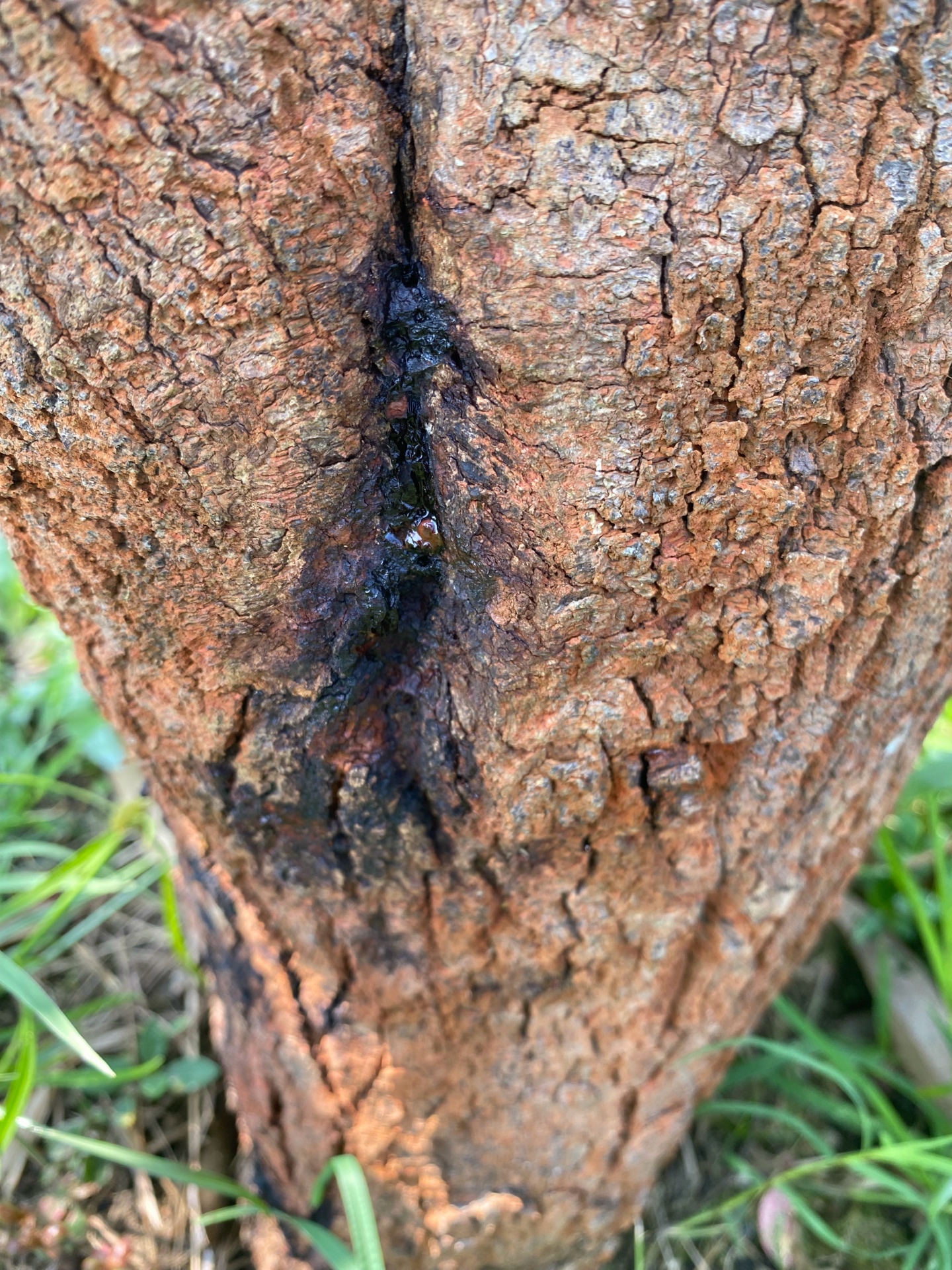
Stage 1 — Disease Discovered
Week 0 · Severe bark necrosis and vascular tissue damage identified on trunk
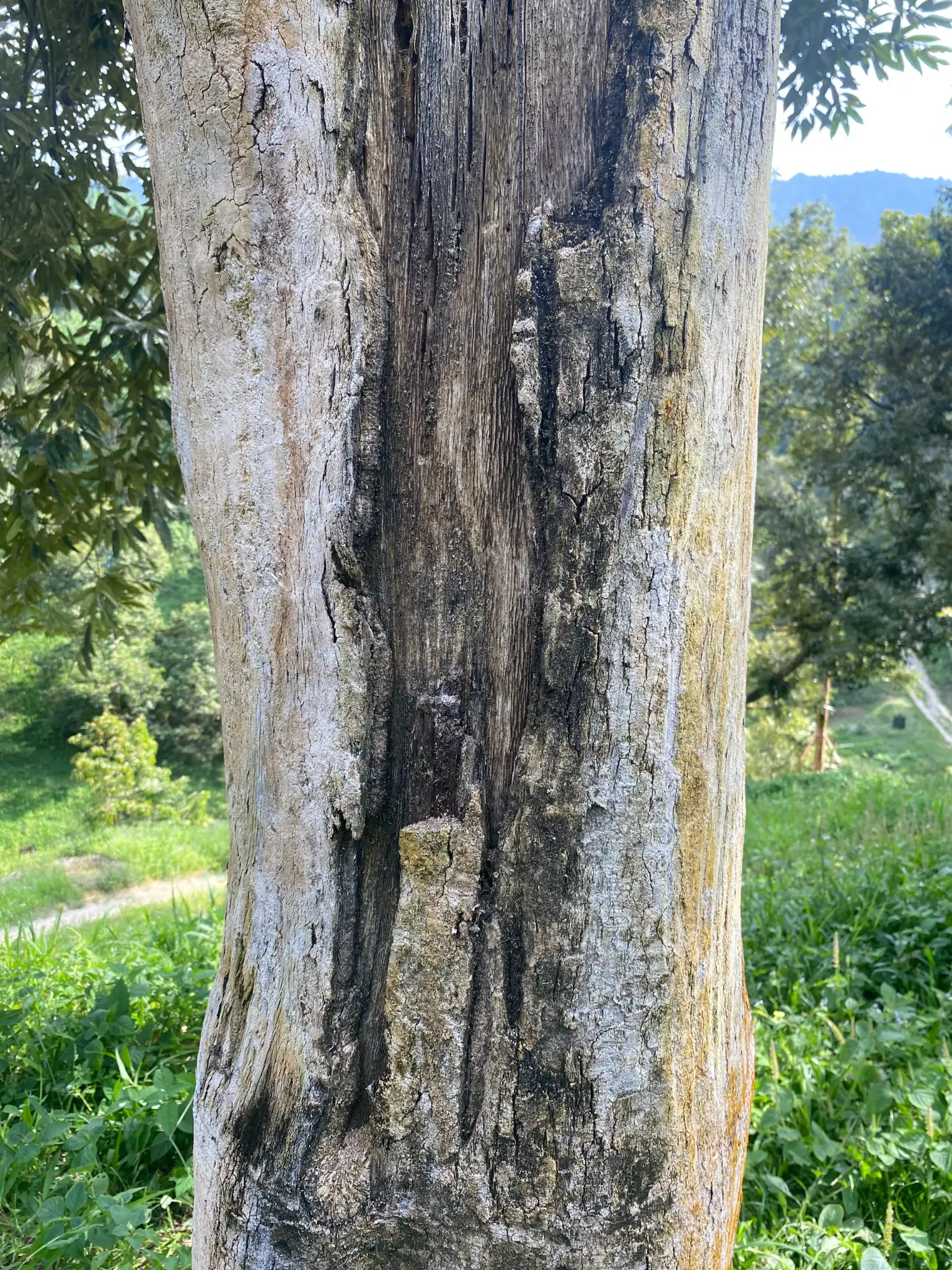
Severe bark necrosis — black lesions
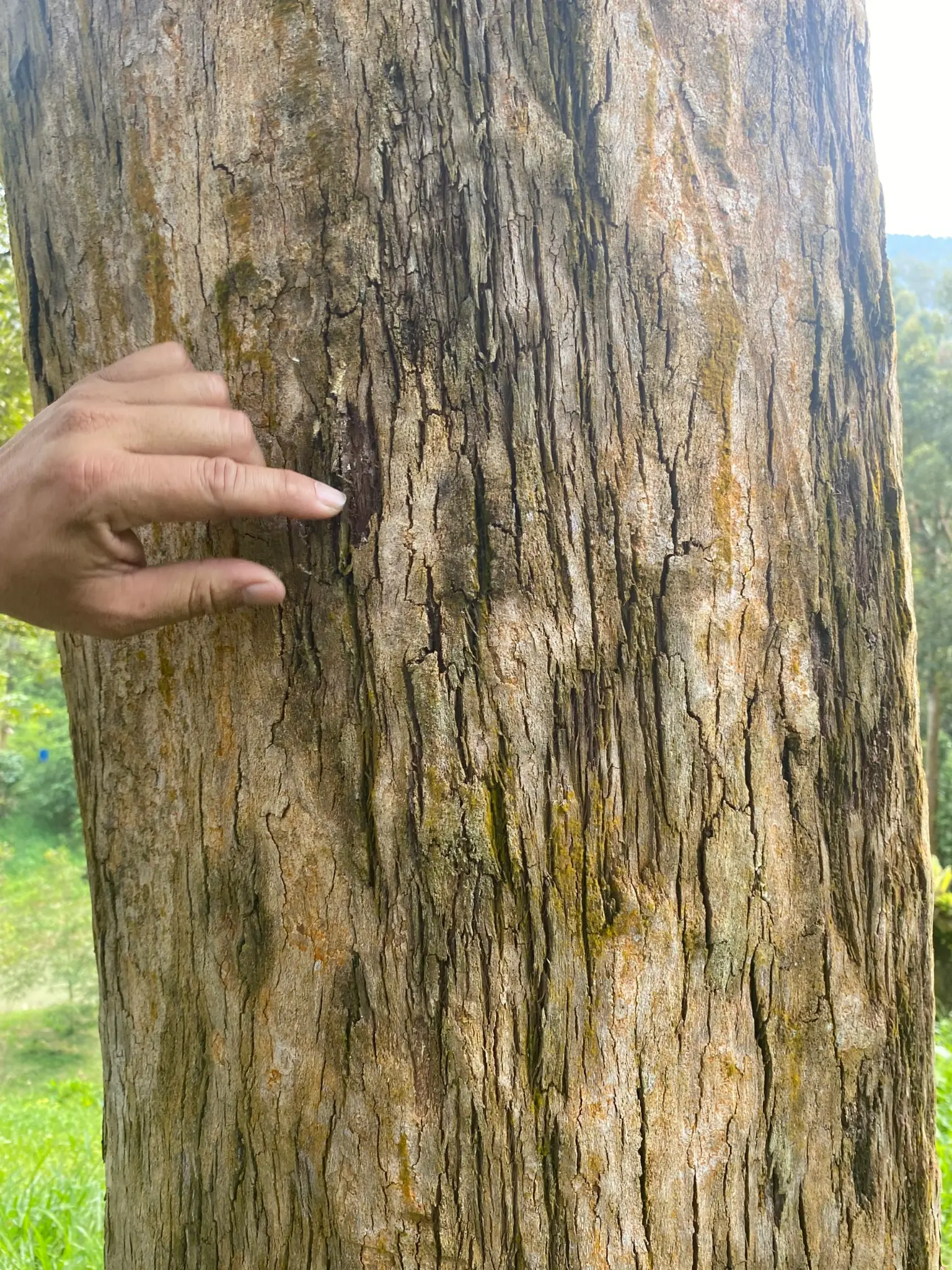
Canker cracking — vascular tissue exposed
Stage 2 — Treatment in Progress
Weeks 1–10 · RootGuard + GrowShield applied; bark healing progressively
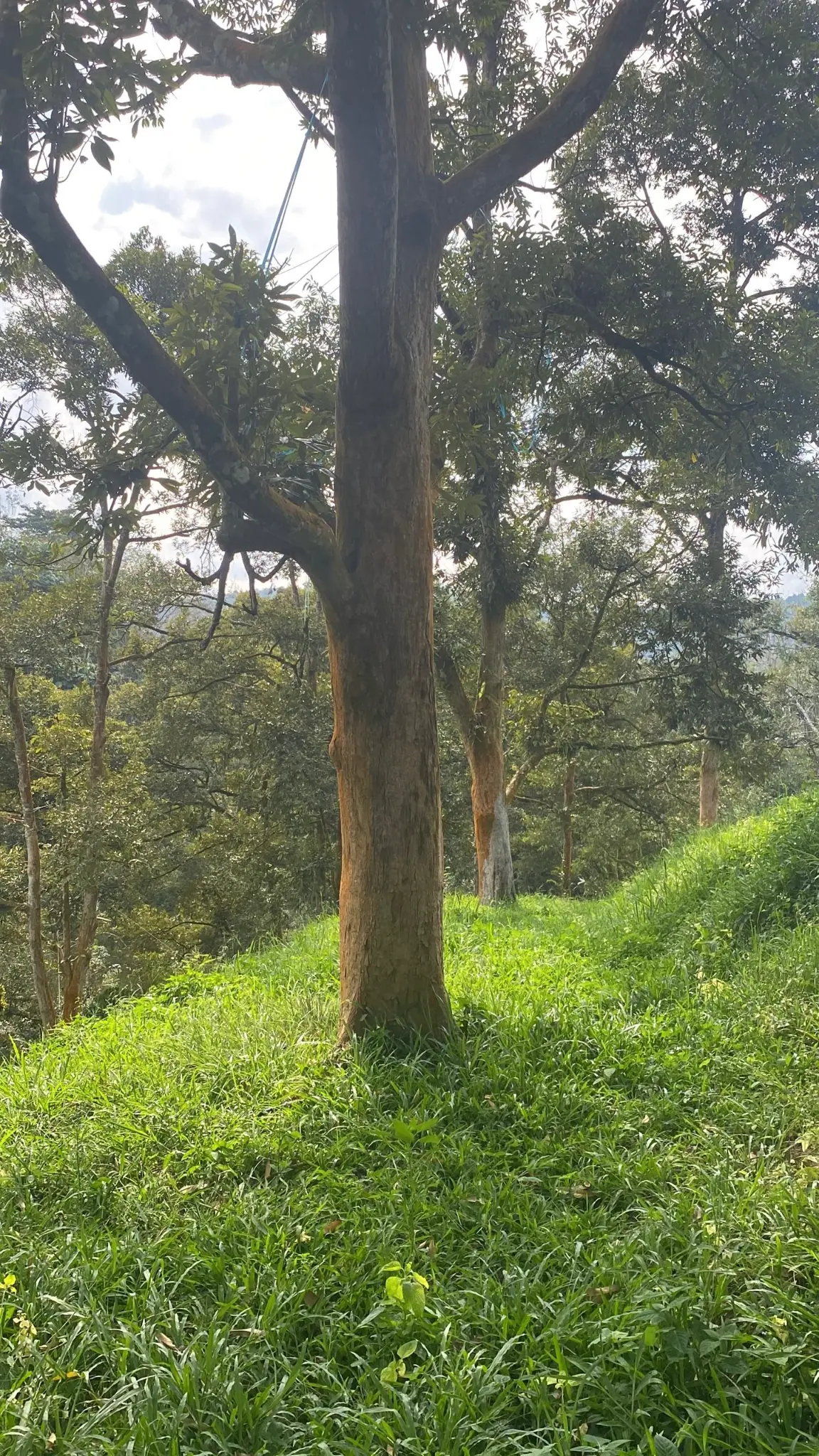
Treatment in progress — bark beginning to heal
Stage 3 — Trees Healthy & Bearing Fruit
Post-recovery · Trees fully recovered and bearing abundant fruit — Gua Musang, Kelantan
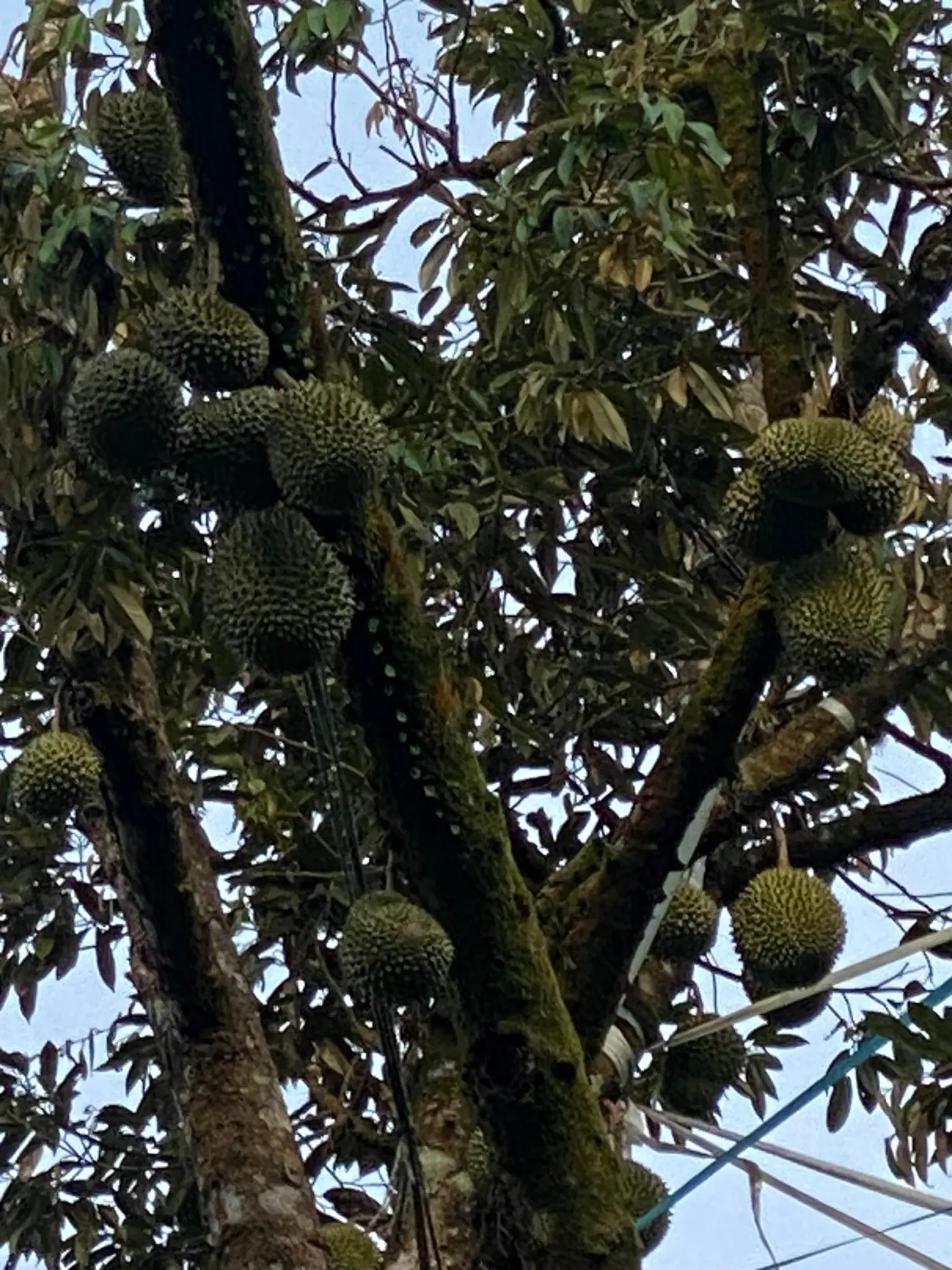
Trees healthy and bearing fruit — full recovery
Traditional Fungicide vs. M-PLUS Bio Protocol
Why do conventional fungicide programmes keep failing — and what makes the M-PLUS Bio approach fundamentally different?
The Problem with "Spray and Pray"
For decades, Malaysian durian farmers have relied on synthetic fungicides — metalaxyl, fosetyl-aluminium, mancozeb — as the first and often only response to canker and root rot. The approach is intuitive: spray the infected area, kill the fungus, repeat. But field evidence tells a different story. Farms that have used the same fungicide programme for 5 or more years consistently report that disease returns faster, spreads wider, and responds less to treatment each season. The reason is resistance: Phytophthora palmivora evolves rapidly under chemical selection pressure.
There is also a structural problem. Fungicides address the symptom — visible fungal growth on bark — but not the cause: a compromised root zone and a tree with suppressed immunity. A tree that cannot mount its own defence will be reinfected as soon as the chemical residue fades. Meanwhile, the chemical itself damages the beneficial soil microbiome that the tree depends on for nutrient uptake, creating a vicious cycle of dependency.
The M-PLUS Bio protocol inverts this logic. RootGuard does not kill the pathogen directly — it signals the tree to defend itself, triggering the same immune cascades (PTI, SA, JA pathways) that a healthy tree would activate naturally. GrowShield seals the physical wound so the pathogen has no re-entry point. NutriBoost rebuilds the root zone so the tree has the nutritional resources to sustain its own recovery. The result is not just disease suppression — it is genuine, lasting immunity.
| Aspect | Traditional Fungicide | M-PLUS Bio Protocol |
|---|---|---|
| Mode of Action | Chemical fungicide kills surface fungi on contact. Does not address root-zone infection or systemic spread. | RootGuard activates the tree’s own immune system (PTI/SA/JA pathways) — treating the disease from inside out. |
| Pathogen Resistance | Repeated fungicide use leads to resistant Phytophthora and Fusarium strains within 2–3 seasons. | Biostimulant mechanism has no resistance pathway — pathogens cannot evolve resistance to the tree’s own immunity. |
| Wound Healing | Fungicides do not seal wounds. Canker lesions remain open entry points for secondary infections. | GrowShield forms a durable biological film over wounds, accelerating callus formation and blocking reinfection. |
| Root Zone Recovery | No soil health benefit. Chemical residues can damage beneficial mycorrhizal fungi and soil microbiome. | NutriBoost restores microbial balance, regenerates fibrous root hairs, and improves nutrient uptake post-disease. |
| Environmental Safety | Synthetic fungicides (e.g. metalaxyl, fosetyl-Al) are toxic to aquatic organisms and persist in soil. | 100% organic, SIRIM-compliant. Safe for soil microbiome, beneficial insects, and surrounding water bodies. |
| Fruit Safety & Residues | Pre-harvest intervals required. Chemical residues may affect export compliance and premium market access. | Zero chemical residues. Fully compatible with organic certification and premium export market requirements. |
| Treatment Duration | Repeated spraying every 2–4 weeks indefinitely. Disease often returns after cessation. | 12-week intensive protocol; monthly maintenance thereafter. Builds long-term systemic immunity. |
| Cost Over 1 Season | High — frequent reapplication, labour cost, and replacement of lost trees add up. | Moderate upfront investment; significantly lower long-term cost due to reduced reapplication and tree loss. |
The Treatment Trio
Three products. One integrated protocol. Complete canker recovery.
RootGuard 护根灵
Immune ActivatorTriggers systemic immune responses (PTI, SA, JA pathways) via Oligogalacturonides. Fortifies root structures and vascular tissues against Phytophthora palmivora and Fusarium.
Technology
Repairon Allozyme Matrix™
Usage Guide
5 mL in 4 L water · 3 L per tree · Once every 3 months (monthly during active disease)
GrowShield 疤愈灵
Wound HealerTopical bio-formulation that accelerates healing at wound sites and forms a durable biological film blocking pathogen ingress. Supports bark and vascular tissue regeneration.
Technology
Advanced Topical Repair Formulation
Usage Guide
Spray to trunk, bark, and exposed wounds · 10 L treats ~30 trees · Weekly for 3–6 months
NutriBoost 肥力宝
Root Zone RevitalizerRehabilitates root zone by restoring microbial balance and regenerating fibrous root hairs. Improves nutrient uptake and builds long-term resistance to future root rot recurrence.
Technology
Bioactive Root-Zone Revitalizer
Usage Guide
Spray around trunk base and root collar · Weekly for 10 weeks · Monthly maintenance thereafter
How do you treat durian canker disease organically?
M-PLUS Bio’s RootGuard + GrowShield + NutriBoost protocol treats durian canker (Phytophthora palmivora) organically in 12 weeks — without synthetic fungicides. RootGuard activates the tree’s systemic immunity via soil drench, GrowShield seals wounds with a biological film, and NutriBoost restores root-zone health. Proven in photo-documented case studies across Malaysia.