Inside the Formula: Why M-PLUS BSF Bio Organic Is a Nutrient System, Not Just a Fertiliser
Every fertiliser bag promises results. But most farmers have experienced the same frustrating cycle: apply, see a brief response, then watch yields plateau — or worse, watch soil health decline year after year. The problem is not the crop. The problem is the input.
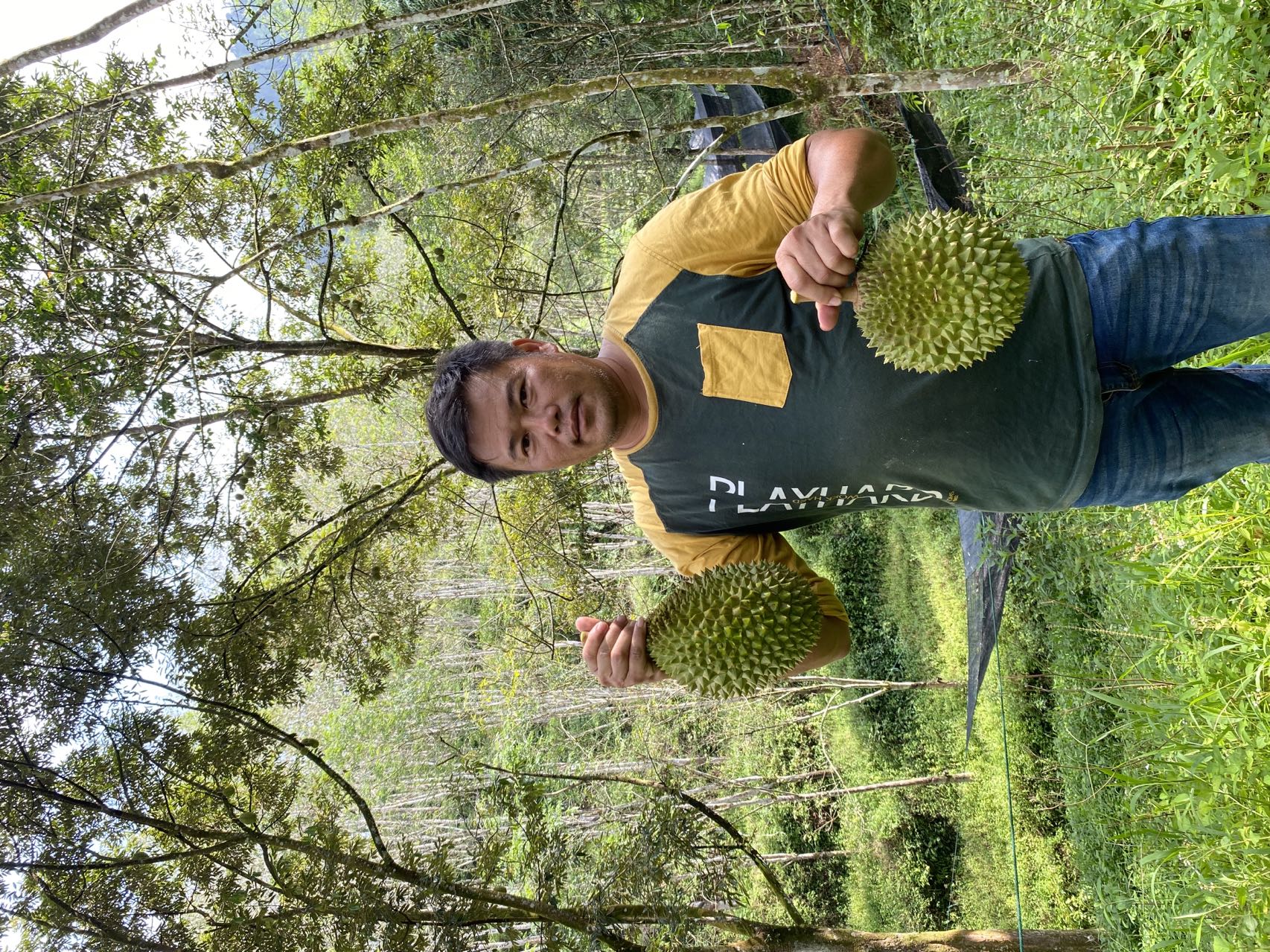
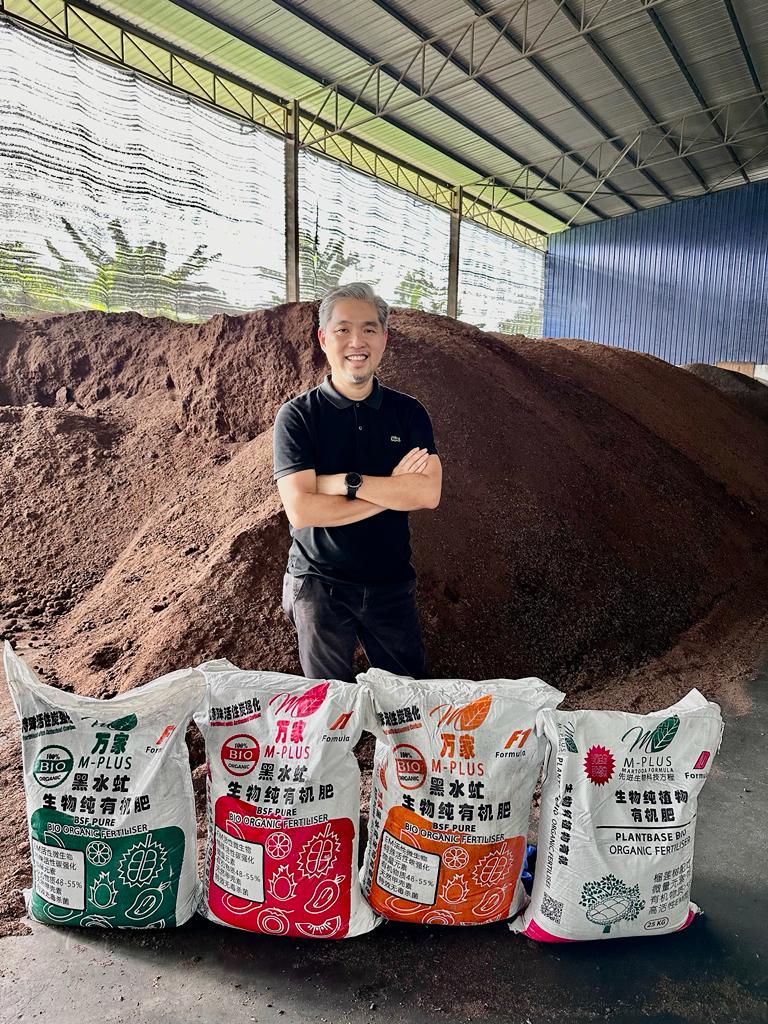
M-PLUS BSF Bio Organic was formulated differently. It is not a single-nutrient product. It is a 3-layer Carbon-Enhanced Bio-Activated Nutrient System — and understanding how it works explains why results like Hoong哥's 300% ROI and Mr. Tan KH's zero fruit drop are not accidents.
Layer 1 — The Foundation: BSF Frass (Black Soldier Fly Organic Matter)
Black Soldier Fly (Hermetia illucens) larvae are nature's most efficient bioconverters. When organic waste passes through BSF larvae, the resulting frass is fundamentally different from conventional compost:
Chitin content — BSF frass is naturally rich in chitin, a structural polysaccharide that triggers systemic resistance (ISR) in plants. When chitin enters the soil, beneficial microbes produce chitinase enzymes that break it down — and the same enzymes attack the cell walls of fungal pathogens like Phytophthora and Fusarium. This is why M-PLUS users consistently report lower disease incidence without fungicide applications.
Balanced slow-release NPK — Unlike chemical fertilisers that deliver a sharp nutrient spike followed by leaching, BSF frass releases nitrogen, phosphorus, and potassium gradually as microbial activity breaks it down. Plants access nutrients when they need them, not all at once.
Lauric acid residues — BSF frass retains traces of lauric acid from the larvae's metabolism. Lauric acid has documented antimicrobial properties, providing an additional layer of protection against soil-borne pathogens.
Layer 2 — The Amplifier: Activated Carbon (Biochar-Grade)
Activated carbon is the most underutilised tool in tropical agriculture. M-PLUS incorporates pharmaceutical-grade activated carbon as a carrier and amplifier for the entire formulation.
Nutrient retention — Activated carbon has an extraordinarily high surface area (up to 1,000 m²/g). In sandy or degraded soils — common across Malaysian durian and fruit farms — nutrients leach rapidly with rainfall. Activated carbon acts as a sponge, holding nutrients in the root zone and releasing them slowly. Field trials show up to 40% reduction in fertiliser loss from leaching.
Microbial habitat — The porous structure of activated carbon provides ideal housing for beneficial soil microbes. Populations of Bacillus, Trichoderma, and mycorrhizal fungi establish 3–5× faster in activated carbon-amended soils compared to unamended controls.
pH buffering — Malaysian soils trend acidic (pH 4.5–5.5), which locks up phosphorus and reduces microbial activity. Activated carbon buffers pH toward the optimal 6.0–6.5 range without the lime application that can disrupt existing microbial communities.
Layer 3 — The Catalyst: Microbial Consortium
The third layer is what separates M-PLUS from any organic product that simply mixes BSF frass with a carrier. M-PLUS is inoculated with a targeted consortium of beneficial microorganisms:
Nitrogen-fixing bacteria (Azospirillum, Azotobacter) — These free-living bacteria fix atmospheric nitrogen directly in the root zone, supplementing the nitrogen supplied by BSF frass. In practice, this means farmers can reduce nitrogen application rates by 20–30% without yield loss.
Phosphate-solubilising bacteria (PSB) — Up to 80% of the phosphorus in Malaysian soils is in insoluble form, locked to iron and aluminium oxides. PSB produce organic acids that release this locked phosphorus, making it available to plant roots. This is why M-PLUS users see improved fruit set and quality even when phosphorus application rates are reduced.
Trichoderma spp. — These beneficial fungi colonise roots and compete aggressively with pathogenic fungi for space and resources. They also produce enzymes that directly degrade fungal cell walls. Trichoderma is particularly effective against the canker-causing Phytophthora palmivora — which is why M-PLUS is the foundation of the Canker Treatment Protocol.
The Synergy: Why the Layers Work Together
Each layer amplifies the others. BSF frass feeds the microbial consortium. Activated carbon houses and protects the microbes while retaining the nutrients they release. The microbes break down chitin and organic matter, releasing nutrients in plant-available forms and suppressing pathogens. The result is a self-reinforcing cycle that improves with each application season.
| Feature | Chemical NPK | Standard Compost | M-PLUS BSF Bio Organic |
| Nutrient release | Immediate spike, then leach | Slow but unpredictable | Slow, controlled, sustained |
| Soil biology | Damages microbial life | Moderate benefit | Actively builds microbial diversity |
| Disease suppression | None | Minimal | Active (chitin ISR + Trichoderma) |
| Nutrient retention | Low (leaching) | Medium | High (activated carbon) |
| pH effect | Acidifying | Neutral | Buffering toward optimal |
| Cost per season | High, escalating | Medium | Decreasing (soil improves) |
| Export certification | Not eligible | Sometimes | Fully organic certified |
| Long-term ROI | Negative (soil degradation) | Neutral | Positive (Hoong哥: +300%) |
What This Means for Your Farm
The formulation is not marketing language. It is the reason why farmers who switch to M-PLUS consistently report:
Reduced input costs — as soil health improves, the amount of fertiliser needed decreases. Hoong哥 achieved RM 2.70/kg production cost on Grade A & B durian. The industry average is RM 4.50–6.00/kg.
Improved fruit quality — better phosphorus availability and microbial activity directly improve fruit set, flesh thickness, and sugar content. This is the difference between Grade B and Grade A pricing.
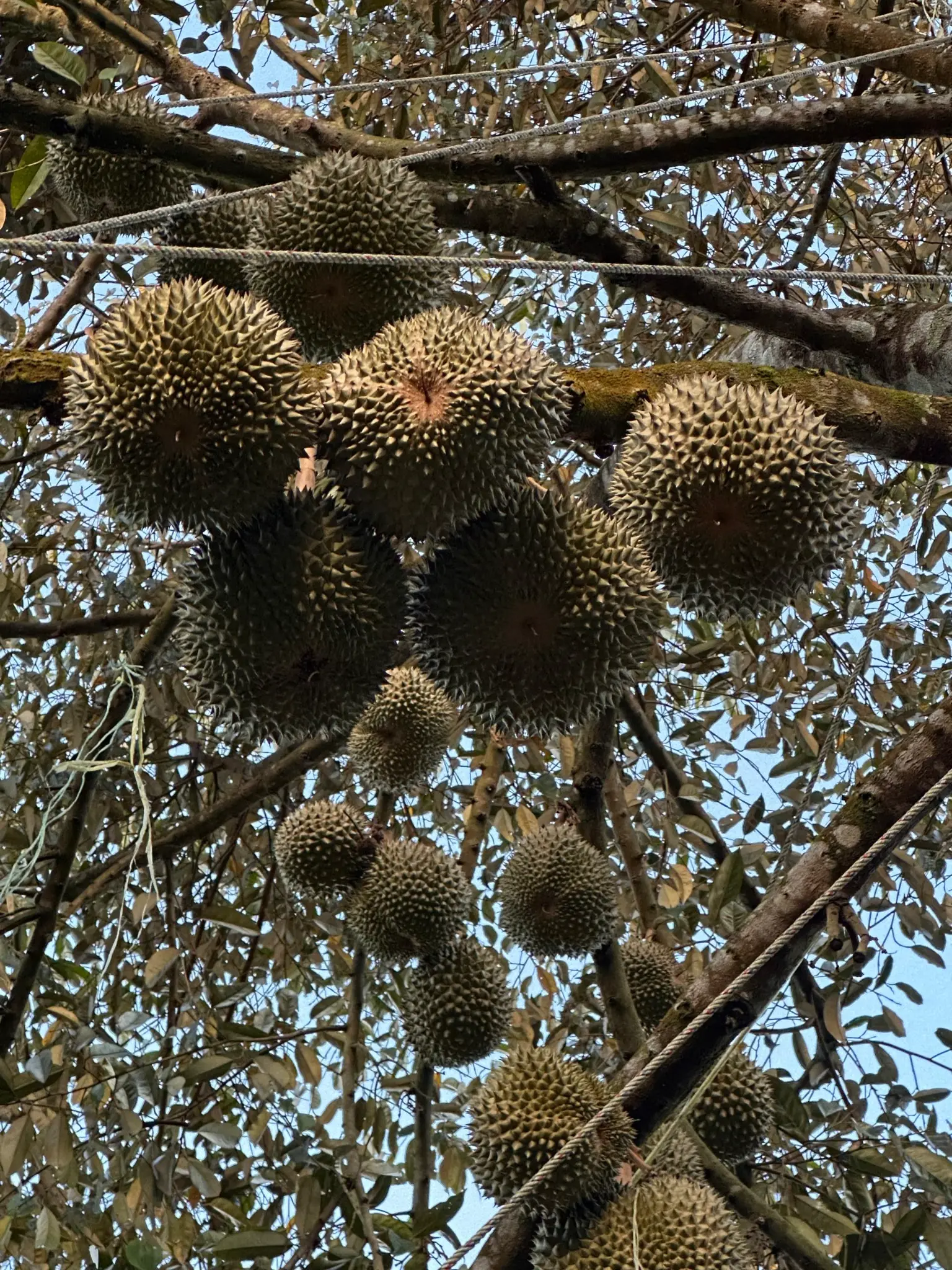
Weather resilience — Mr. Tan KH's farm in Kulai Jaya held its fruit set through a harsh weather period that devastated neighbouring farms. Healthy soil biology buffers plants against temperature and moisture stress.
Lower disease pressure — the chitin-Trichoderma combination means less fungicide spend and fewer emergency interventions.
Start with a Free Farm Assessment
The right application protocol depends on your soil type, crop, and current condition. Our agronomists will assess your farm and recommend the correct M-PLUS programme — at no cost.